




















Winter Wedding Guest Outfits: Warm, Elegant, Season-Appropriate
The best winter wedding guest outfits combine rich, weighty fabrics with smart layering so you stay warm through outdoor photos and late-night events without sacrificing the polished, festive look a wedding calls for. Winter weddings bring a specific styling challenge — heavy fabrics can look formal but feel bulky, while lighter festive fabrics look right but leave you cold the moment the sun sets. This guide walks through which fabrics strike that balance, how to layer without losing your outfit's shape, which colors suit this wedding season, and how to accessorize so the cold doesn't compromise the occasion.
Fabrics That Balance Warmth and Formality
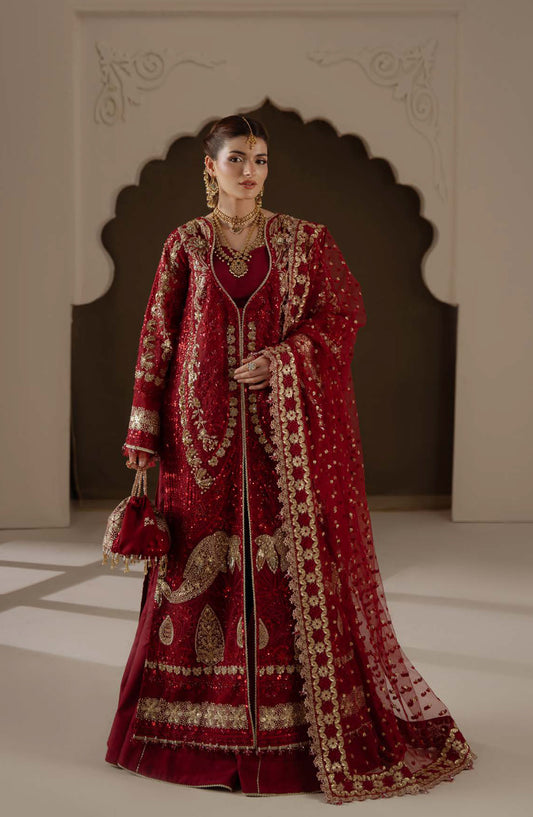
Winter wedding season calls for fabrics with enough weight to hold embroidery and structure, while still being warm enough to wear through an evening event. Velvet is the standout choice for this exact reason — its dense pile naturally insulates while giving that rich, formal sheen that photographs beautifully under event lighting. A velvet shirt or full outfit with minimal embellishment often looks more elevated than a heavily worked lighter fabric.
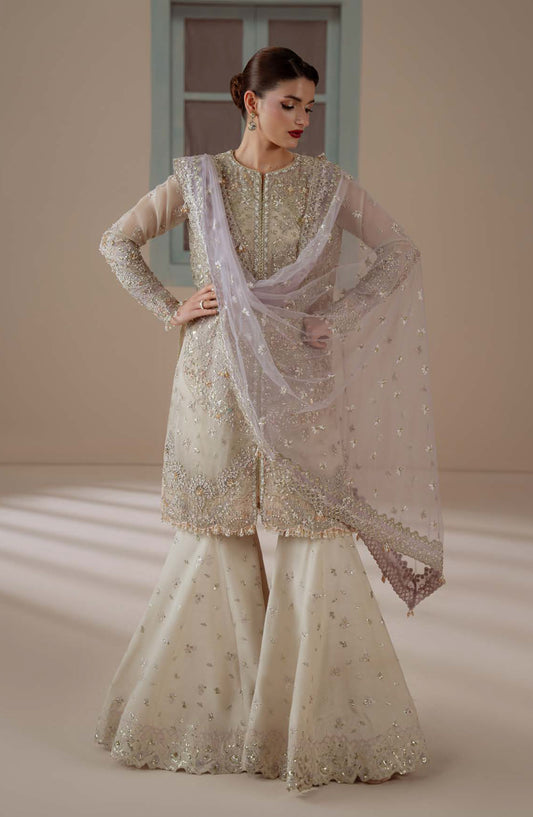
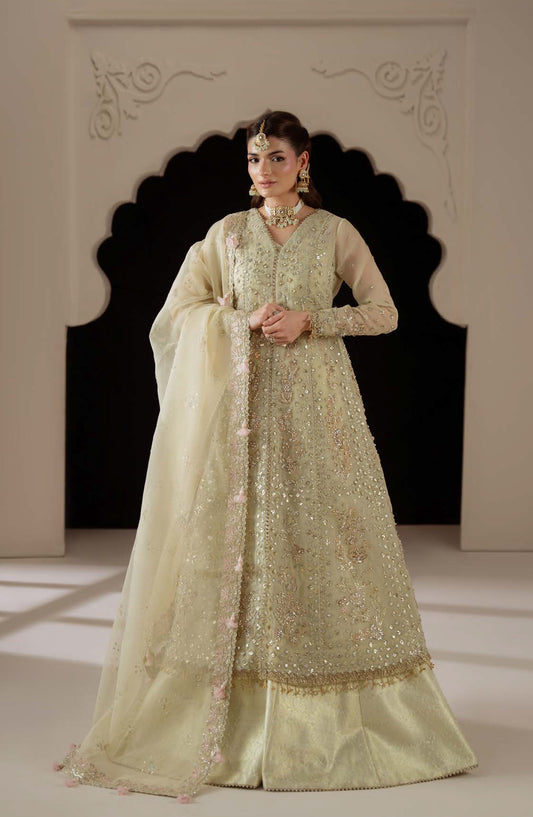
Silk blends with a slight weight to them, like raw silk or silk-khaddar mixes, offer another strong option for daytime wedding functions, where full velvet might feel too heavy. These fabrics hold their shape well for structured cuts like sharara or gharara sets, which are popular choices for wedding guest looks.
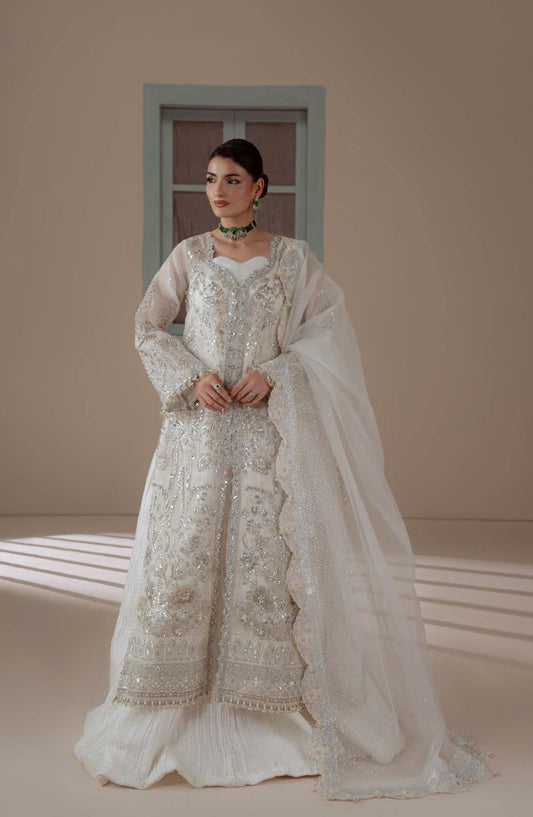
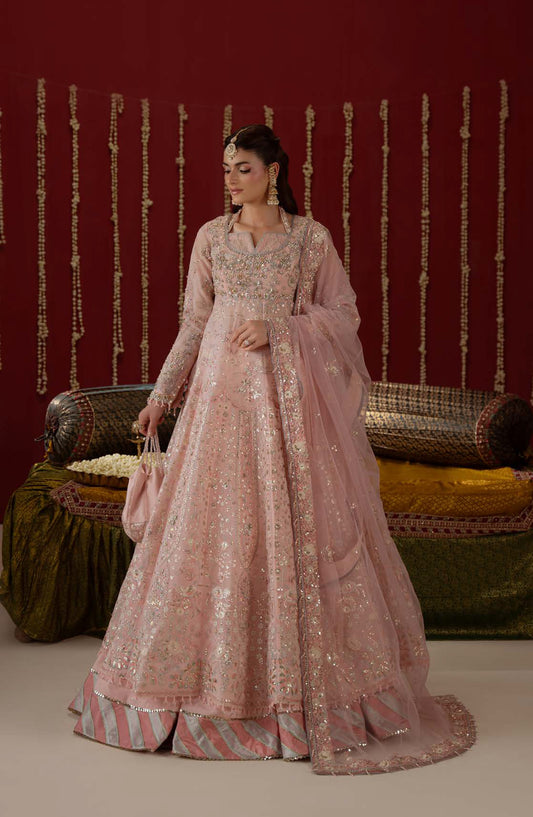
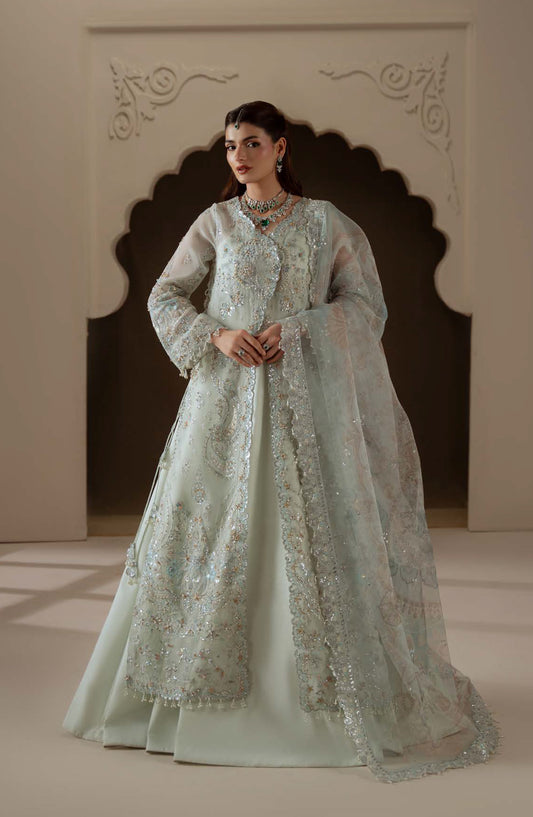
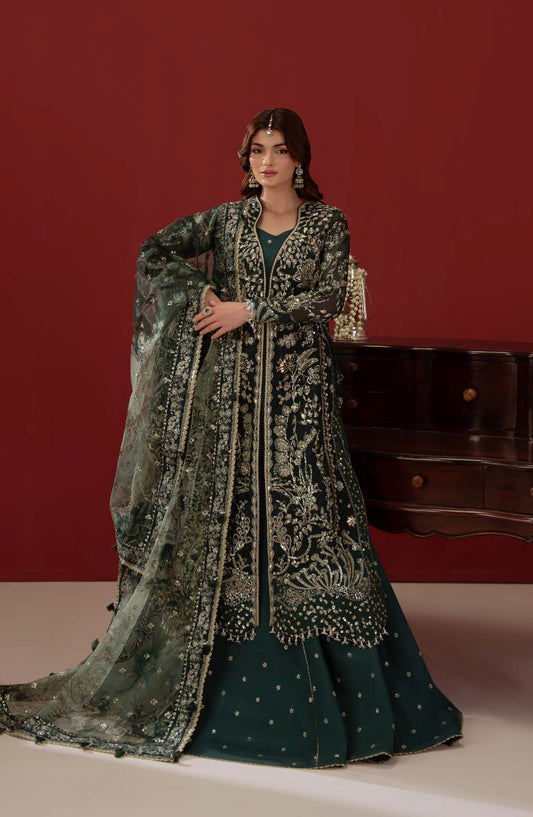
For those who want embroidery to be the star of the outfit, a heavier net or organza over a warm inner lining allows for intricate handwork without the fabric itself needing to carry the warmth — the lining does that job instead, letting the outer layer stay purely decorative.
Layering Without Losing the Silhouette
The challenge with wedding guest outfits in winter is that most festive silhouettes — fitted shirts, sharara sets, lehengas — aren't designed with an extra layer in mind. The solution isn't to add bulk, but to layer smart.
A fitted, long-line shrug or cape in velvet or raw silk over a sharara or lehenga adds coverage for the shoulders and arms, the areas most exposed to cold, without disrupting the flow of the outfit below. For sharara and gharara sets specifically, a structured cape works better than a shawl, since the cape's shape mirrors the tailored lines of the outfit rather than draping loosely over it.
If you're wearing a fitted shirt with trousers or a sharara, a well-tailored waistcoat in a contrasting or complementary color can double as both warmth and styling detail, especially if it has embroidery that echoes the main outfit. The goal throughout is proportion — heavier layers pair better with fitted bottoms, while looser silhouettes need a slimmer top layer to avoid looking shapeless.
Color Choices for Winter Wedding Season
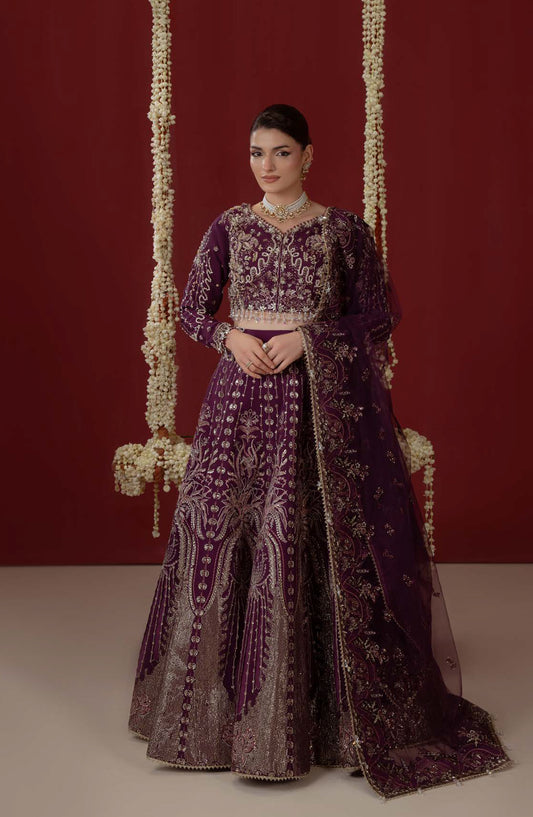
Winter wedding guest outfits benefit from colors that read as festive under both daylight and evening lighting, since most weddings span both. Deep jewel tones — emerald, sapphire, wine, and deep plum — remain reliable choices because they photograph richly under warm indoor lighting while still looking sophisticated in daylight event portions like a nikkah or mehndi held earlier in the day.
Metallics, particularly antique gold and copper, are having a strong season for both solid outfits and as embroidery accents on darker base colors. These tones catch light beautifully at evening events, which is where a lot of wedding guest photography happens.
For daytime or more casual wedding events, muted rose, dusty mauve, and warm camel tones offer a softer alternative to the deep jewel palette, working well for guests who want to look festive without competing with the bride's or main family's color choices.
Accessorizing for Cold-Weather Events
Accessories at winter weddings need to do double duty — adding to the outfit's overall look while offering practical warmth where the outfit itself leaves gaps. Statement earrings paired with a lighter necklace, rather than a heavy set, keep the upper body from looking overly weighed down once a shrug or cape is added to the mix.
A structured clutch works better than an open-top bag for winter events, since it's easier to manage alongside a shawl or cape that you may be adjusting throughout the evening. Footwear deserves attention too — closed-toe heels or embellished juttis offer more warmth than open sandals, which matter more than people expect at outdoor or semi-outdoor wedding venues common in winter wedding season.
Finally, consider a small, elegant hand-held shawl in a complementary color as a backup layer for outdoor portions of the event, like an outdoor nikkah stage or garden photos, even if your main outfit already includes a cape or waistcoat.
FAQs
What fabric is best for a winter wedding guest outfit?
Velvet is the top choice for its natural warmth and formal sheen, while raw silk or silk-khaddar blends work well for daytime functions that need a lighter option.
How do I stay warm without ruining my outfit's silhouette?
Choose fitted layering pieces like structured capes or tailored waistcoats that follow your outfit's existing lines, rather than loose shawls that can disrupt a tailored look.
What colors are trending for winter wedding guest looks?
Deep jewel tones like emerald, sapphire, and plum, along with antique gold and copper metallics, are leading this wedding season.
Can I wear the same outfit for a daytime and evening wedding function?
Yes, if you choose a mid-weight fabric like raw silk in a versatile color, then adjust with accessories and a heavier or lighter layering piece depending on the event's timing.
What footwear works best for outdoor winter weddings?
Closed-toe heels or embellished juttis offer more warmth and comfort than open sandals, which is especially useful for outdoor or semi-outdoor wedding venues.