





















How to Build a Capsule Wardrobe with Pakistani Formal Wear
A Pakistani formal capsule wardrobe is a small, deliberately chosen set of around 8–12 pieces — kameez, bottoms, and dupattas in coordinating colors and fabrics — designed so each item can be mixed with several others to produce dozens of distinct outfits. The goal is fewer pieces working harder, not a smaller wardrobe with fewer options.
Formal wear is usually where wardrobes get the most cluttered and the least efficient — one-off embellished suits bought for a single wedding function, worn once, and then rarely touched again. A capsule approach flips that pattern: instead of buying formal pieces in isolation, you build a coordinated set where color, fabric, and silhouette are chosen to work together, so the same handful of pieces can carry you through an entire wedding season or several formal events without repeating an identical look.
Why a Capsule Wardrobe Works for Formal Wear
The math behind a capsule wardrobe is simple: a small set of coordinating pieces produces far more outfit combinations than the same number of unrelated, one-off purchases ever could.
If you buy five formal suits that have nothing in common — different color families, different fabric weights, different levels of embellishment — you end up with exactly five outfits, no more. But if those same five pieces are chosen with overlapping colors and complementary fabrics, separating tops from bottoms and mixing dupattas across looks, that same five pieces can realistically produce twelve to fifteen distinct outfit combinations.
There's a practical financial angle here too. Formal wear tends to be the most expensive category in most wardrobes, so getting more mileage out of fewer pieces directly reduces how often you need to buy something new for the next event. It also solves a common problem with heavily embellished formal suits specifically — because they're so recognizable, wearing the exact same full look twice to overlapping social circles is often something people try to avoid. A capsule approach lets you recombine elements instead, so the outfit reads as new even though most of the pieces have been worn before.
The Core Pieces You Need
A functional formal capsule needs three categories represented — structured kameez pieces, versatile bottoms, and dupattas that can cross over between multiple tops — with each piece chosen specifically for how well it pairs with the others, not just on its own merit.
Kameez / tops (3–4 pieces):
-
One heavily embellished statement piece for the highest-formality event on your calendar (a wedding or major function).
-
One mid-formality embroidered kameez in a versatile jewel tone that pairs easily with multiple bottoms.
-
One lighter, subtly embellished piece for lower-key formal events like engagement parties or formal dinners.
-
Optionally, one neutral or pastel piece that anchors more understated looks.
Bottoms (3 pieces):
-
A straight or slightly flared trouser in a neutral tone that pairs with almost every top.
-
One dramatic silhouette — gharara, sharara, or a structured palazzo — for higher-formality events where movement and volume matter.
-
A churidar or cigarette pant for a sleeker, more streamlined alternative.
Dupattas (2–3 pieces):
-
One heavily embellished dupatta that elevates a simpler kameez for a bigger event.
-
One lighter, versatile dupatta in a neutral or complementary tone that works across multiple tops.
-
Optionally, one statement-color dupatta that can shift the entire tone of an otherwise plain outfit.
The key principle across all three categories: every piece should be chosen with at least two other pieces in the capsule specifically in mind, not selected purely because it looks good in isolation.
Mixing and Matching for Maximum Outfits
The real value of a capsule shows up when you stop thinking in fixed "outfits" and start thinking in interchangeable layers — because the same kameez worn with a different bottom and dupatta combination can shift an entire look from mehndi-appropriate to walima-appropriate.
A few mixing strategies that consistently work well within a formal capsule:
-
Anchor with a neutral, rotate the statement piece. Keep one bottom (like a neutral straight trouser) as your base, and rotate which top or dupatta carries the embellishment. This keeps the overall silhouette simple while letting embroidery or color do the visual work.
-
Separate your "occasion pairing" from your default pairing. A dramatic gharara might be earmarked mentally for your most formal event, but there's often no reason it can't also pair with a simpler, lower-key kameez for a different, less formal function.
-
Use dupattas to shift formality up or down. The same mid-formality kameez can read as more festive with a heavily embellished dupatta, or more understated with a plain chiffon one — this single swap often does more visual work than changing the entire outfit.
-
Track color families, not exact matches. Pieces don't need to be the exact same shade to work together — a capsule built around 2–3 loose color families (say, jewel tones plus one neutral) gives you far more flexibility than pieces picked to match one specific color exactly.
Sample 10-Piece Capsule
Here's what a complete 10-piece formal capsule might look like in practice, built around a jewel-tone and neutral color family:
-
Emerald green heavily embroidered kameez (statement piece)
-
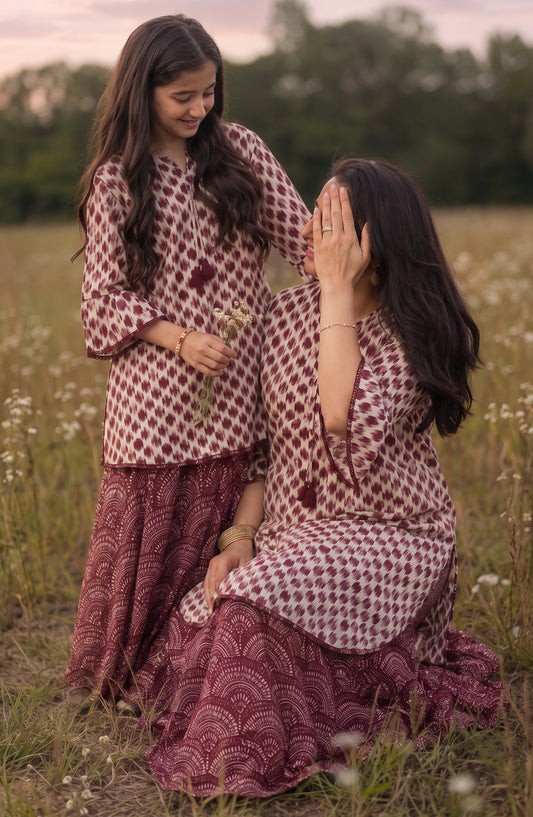
Maroon mid-formality embroidered kameez
-
Blush pink subtly embellished kameez (lower-formality option)
-
Neutral gold-toned pastel kameez (versatile anchor piece)
-
Neutral straight-cut trouser (pairs with almost everything above)
-
Structured gharara in a deep jewel tone (for the highest-formality event)
-
Sleek churidar in black or another deep neutral
-
Heavily embellished net dupatta in gold
-
Plain chiffon dupatta in a soft neutral tone
-
Statement-color organza dupatta in a contrasting jewel tone
With these ten pieces alone, thoughtful mixing across tops, bottoms, and dupattas can realistically produce well over fifteen distinct formal looks — enough to cover most wedding seasons without a single repeated full outfit.
You can start building a capsule like this from our formal wear collection, where pieces are organized by color family and formality level to make mixing and matching easier from the start.
For a broader look at capsule wardrobe principles that translate well across formal wear specifically, the Business of Fashion's sustainability and wardrobe-efficiency reporting offers useful context on why smaller, more versatile wardrobes have become a wider industry conversation.
FAQs
Q1: How many pieces should a Pakistani formal capsule wardrobe realistically have?
Somewhere between eight and twelve pieces tends to be the sweet spot — enough variety to avoid repetition across a wedding season, but small enough that every piece stays genuinely versatile rather than becoming dead weight in the closet.
Q2: Can a capsule wardrobe work if my formal pieces are already very different from each other?
Yes, though it takes a bit more intentional pairing — start by identifying which existing pieces share a color family or formality level, then fill gaps with new pieces chosen specifically to bridge and connect what you already own.
Q3: Is it better to invest in one very expensive statement piece or several mid-range pieces?
This depends on your event calendar, but a common approach is one higher-investment statement piece for your single most formal event, balanced with several more versatile, mid-range pieces that can be mixed across multiple lower-formality occasions.
Q4: How do I avoid a capsule wardrobe feeling repetitive at events with overlapping guest lists?
Lean on dupatta and bottom swaps rather than repeating a full kameez-bottom-dupatta combination twice — changing even one element significantly shifts how a look reads, even to guests who've seen individual pieces before.
Q5: Should shoes and jewelry be part of the capsule planning too?
While this guide focuses on clothing, the same principle applies well beyond it — choosing 2–3 versatile jewelry sets and shoe options in coordinating tones extends the capsule logic and further reduces how much you need to plan for each individual event.