



Wedding Dress Shopping by Budget: Under 10K, 25K, 50K, 100K PKR
In Pakistan, wedding guest and semi-bridal outfits typically start around PKR 10,000 for a basic embroidered stitched suit, PKR 25,000–40,000 for mid-range designer unstitched pieces, PKR 50,000–80,000 for heavier festive wear with fuller embroidery, and PKR 100,000+ for designer-label bridal-adjacent pieces. Price scales primarily with embroidery density and fabric type, not brand name alone.
If you've ever stood in front of two suits that look nearly identical and wondered why one costs three times the other, you're not imagining things. Wedding season pricing in Pakistan can feel arbitrary from the outside, but it isn't. Once you know what you're actually paying for at each tier, budgeting for a full wedding season — Mehndi, Barat, Walima, and everything in between — gets a lot less stressful.
This guide breaks down exactly what to expect at four common budget tiers, so you can shop with a clear sense of what "good value" looks like at your price point.
What Drives the Price of a Pakistani Wedding Outfit
Four things move the price needle more than anything else:
-
Embroidery density and technique. Hand-guided machine embroidery costs more than basic all-over machine work, and fully hand-embroidered pieces (zardozi, dabka, tilla) sit at the top of the market.
-
Fabric type. Lawn and cotton sit at the affordable end; organza, silk, and jamawar cost more to produce and drape differently.
-
Fabric weight and finishing. Heavier, higher-thread-count fabric feels and photographs better, and it costs more per meter.
-
Brand and design exclusivity. A designer name adds a premium, but it's usually the smallest factor of the four — a well-made unbranded piece can outperform an overpriced branded one at the same price point.
Once you understand this, it becomes much easier to shop by what's actually in the outfit rather than by label alone.
Under 10K PKR — What You Get
At this tier, you're typically looking at a stitched 2- or 3-piece suit in lawn or cotton with light embroidery — a printed or lightly embellished front, simple trouser, and matching or contrasting dupatta. This is a realistic budget for a casual Mehndi or Dholki outfit, or a daytime family function where the dress code is relaxed.
What to prioritize at this price: fabric quality over embellishment. A well-woven lawn suit with minimal embroidery will outlast and out-photograph a poorly finished suit that's trying to look "heavier" than its price point allows.
Browse: Budget Friendly Exclusive
25K–40K PKR — Mid-Range Designer Unstitched
This is where most guests land for Barat-adjacent or Walima-adjacent functions that aren't full formal events. At this tier, you can expect designer unstitched pieces with moderate embroidery — often a heavier embroidered front panel, a plainer back and sleeves to balance cost, and a coordinating or embellished dupatta.
Buying unstitched at this tier also gives you more control: you choose the tailor, the fit, and can request adjustments a stitched piece won't allow.
50K–80K PKR — Festive Wear with Fuller Embroidery
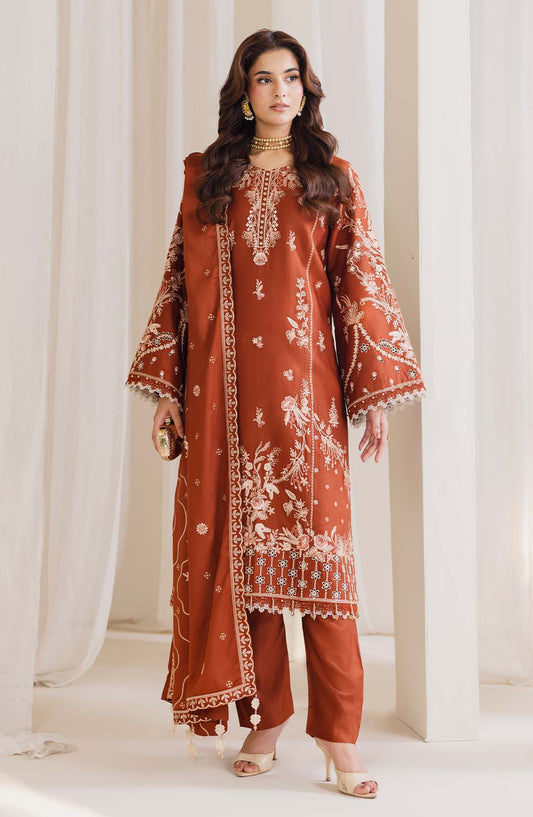
At this range, embroidery coverage increases significantly — often full-front, sleeve, and daman (hem) work, sometimes in richer fabrics like organza or net layered over a base fabric. This tier suits Barat night, Walima, or any event where you want the outfit to read as a clear step up from everyday festive wear.
This is also where fabric choice starts to matter more for comfort — heavier embellishment can add weight, so if you're attending a long event, ask about the actual weight of the piece before committing.
100K+ PKR — Designer Label Bridal-Adjacent Pieces
At this level, you're generally paying for a combination of design exclusivity, premium fabric (jamawar, raw silk, heavily worked organza), and often hand-finished detailing. These pieces are typically reserved for close family of the bride and groom, or for brides themselves shopping for secondary event outfits (Mehndi or Walima looks that aren't the main bridal dress).
How to Stretch Your Budget Without Looking Budget
A few practical moves that consistently work:
-
Spend on one hero element, not everywhere. A statement dupatta or a heavily embroidered front paired with a simpler trouser reads as intentional, not cheap.
-
Buy unstitched when your budget is tight. You're not paying for stitching labor built into a ready-made price, and you can commission a tailor to add small custom touches.
-
Match embellishment level to the event, not the budget you wish you had. An overdressed 10K outfit at a Barat looks more mismatched than a well-chosen 25K outfit that fits the formality correctly.
-
Reuse a base piece across events. A well-chosen chiffon or organza suit can be restyled with different jewelry and dupatta draping for two separate functions.
Budget Comparison at a Glance
|
Tier |
Typical Fabric |
Embroidery Level |
Best For |
Price Range (PKR) |
|---|---|---|---|---|
|
Entry |
Lawn, cotton |
Light/printed |
Dholki, casual Mehndi |
Under 10,000 |
|
Mid |
Unstitched designer lawn/cotton |
Moderate, front-focused |
Barat-adjacent, family functions |
25,000–40,000 |
|
Elevated |
Organza, net over base fabric |
Full coverage, daman work |
Barat, Walima |
50,000–80,000 |
|
Premium |
Jamawar, raw silk |
Hand-finished, heavy |
Bridal-adjacent, close family |
100,000+ |
Frequently Asked Questions
How much does a wedding guest outfit cost in Pakistan?
A guest outfit for a casual function can start under PKR 10,000, while a Barat-appropriate outfit with fuller embroidery typically runs PKR 25,000–80,000 depending on fabric and embellishment level.
Is unstitched or stitched cheaper for weddings?
Unstitched is usually more cost-effective since you're not paying for pre-done stitching labor, and it allows a tailor to customize fit and small design details to your budget.
What's the minimum budget for a Barat-appropriate outfit?
Realistically, PKR 25,000–30,000 is the starting point for an outfit with enough embroidery coverage and fabric quality to feel appropriately formal for a Barat.
Does spending more always mean better quality?
Not always — brand premium accounts for some of the price gap. Focus on fabric weight, embroidery technique, and finishing rather than the label alone.