





Complete Pakistani Wedding Dress Guide: What to Wear at Every Event
Every event in a Pakistani wedding calls for a distinct dress code — Mehndi means color and movement, Barat means the most formal, heavily embellished outfit of the season, Nikkah favors elegant restraint, and Valima calls for refined evening glamour, with guest dressing shifting slightly across all four depending on your relationship to the couple. Getting it right isn't about owning the most expensive outfit — it's about understanding what each specific event actually calls for. This pillar guide breaks down every wedding function in detail, so you can shop the Wedding Formals Collection with a clear plan rather than guessing event by event.
Mehndi: Where Color Gets to Be Loud
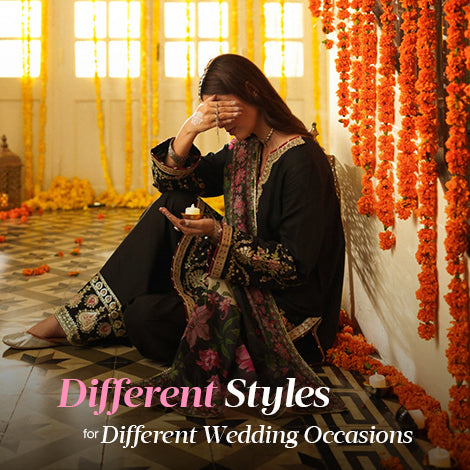
Mehndi is the one wedding event where dressing rules loosen the most — it's meant to be vibrant, joyful, and full of movement, since the event itself typically involves dancing, music, and a more relaxed, celebratory energy than the more formal functions to follow.
Colors: Bright yellows, greens, oranges, and multicolor combinations dominate Mehndi dressing, often echoing the turmeric and floral traditions the event is rooted in. Bold color-blocking or gradient (ombré) fabrics are especially popular for this specific function.
Fabric and Silhouette: Lighter fabrics with movement — georgette, chiffon, or lightweight silk — work best, since comfort matters for an event involving dancing and extended socializing. Flared lehengas, angrakha-style suits, or gharara sets are common choices that photograph and move well under Mehndi's typically festive lighting.
Embellishment: Mirror work, tassels, and floral jewelry (sometimes literal fresh flowers) are signature to Mehndi styling, paired with lighter embroidery than what's typically reserved for Barat or Valima.
For the Bride: Brides traditionally wear yellow or green, often paired with statement floral jewelry, though many now incorporate personal color preferences within the traditional palette.
For Close Family and Guests: Bright, festive colors are welcomed and expected — this is generally not the event to play it safe with muted tones, since Mehndi's entire aesthetic leans into color and celebration.
Barat: The Night for Maximum Shine
Barat (or the wedding/rukhsati ceremony) is typically the most formal and heavily embellished event of the wedding, and dressing reflects that significance — this is where the richest fabrics and most detailed embroidery are expected.
Colors: Deep reds, maroons, and jewel tones remain traditional favorites, particularly for the bride, though contemporary brides increasingly choose alternative colors like deep green, royal blue, or even pastels for a more distinctive look.
Fabric and Silhouette: Heavier fabrics — silk, velvet, raw silk, and organza — with structured lehengas, heavily embellished gowns, or traditional shararas are standard for this event. The formality of the fabric should visibly signal that this is the wedding's centerpiece function.
Embellishment: Zardozi, tilla, dabka, and stone work are common at their heaviest here, since Barat outfits are meant to carry the most visual weight and formality of the entire wedding season.
For the Bride: This is traditionally the most elaborate outfit of the wedding, often a heavily embellished lehenga or gown in a rich, formal color, paired with statement jewelry.
For Close Family and Guests: Rich, formal colors and heavier embellishment are appropriate, though guests should generally avoid colors too close to what's traditionally reserved for the bride (deep reds in particular) out of respect for tradition.
Nikkah: Elegance That Doesn't Shout
Nikkah is the religious contract ceremony, and dressing here tends toward refined elegance rather than maximum embellishment — it's a more solemn, intimate function compared to the celebratory energy of Mehndi or the grandeur of Barat.
Colors: Soft pastels, ivory, champagne, and muted jewel tones are popular choices, reflecting the ceremony's more understated, dignified tone compared to other wedding events.
Fabric and Silhouette: Lighter formal fabrics — organza, chiffon, or fine silk — in relatively simple, elegant cuts work well. Structured but not overly voluminous silhouettes tend to suit the ceremony's tone better than dramatic, heavily flared designs.
Embellishment: Delicate embroidery, subtle sequin work, or lace detailing is generally preferred over heavy, dense embellishment, keeping the overall look refined rather than overpowering.
For the Bride: Many brides choose ivory, pastel, or soft gold tones for Nikkah, often paired with a lighter dupatta drape and more understated jewelry compared to Barat.
For Close Family and Guests: Elegant, semi-formal dressing in softer colors is appropriate — this is generally not the event for the boldest or most heavily embellished pieces in your wardrobe.
Valima: Where Evening Glamour Takes Over
Valima, hosted by the groom's family, is typically an evening reception with a more contemporary, glamorous dress code — think formal evening wear rather than traditional bridal reds.
Colors: Contemporary brides frequently choose non-traditional colors for Valima — soft pinks, silver, champagne, or even black and deep navy have become popular choices that stand apart from Barat's traditional palette.
Fabric and Silhouette: Structured gowns, fitted lehengas, or sleek, contemporary silhouettes in richer evening fabrics — velvet, embellished net, or structured silk — suit Valima's more polished evening atmosphere.
Embellishment: A more modern, refined take on embellishment — often with metallic accents, sequins, or crystal work rather than the heavier traditional zardozi seen at Barat — fits Valima's contemporary reception feel.
For the Bride: Many brides use Valima as an opportunity to wear something distinctly different from their Barat outfit — often a gown or a more Western-influenced silhouette paired with statement jewelry.
For Close Family and Guests: Formal evening wear in rich, sophisticated colors works well — this event tends to have more flexibility for contemporary or fusion styles compared to the more traditionally-rooted Barat.
Guest Dressing by Event: Getting the Balance Right
As a Close Family Member: You're expected to dress more formally and with slightly more embellishment than a general guest, particularly for Barat, since you're likely to be prominently featured in event photography — but still avoid colors and styles too close to what the bride is wearing at each specific function.
As a General Guest: A well-put-together, appropriately formal outfit that respects each event's dress code is sufficient — you don't need to match the embellishment level of close family, but showing up under-dressed for the formality of the specific event (especially Barat) can feel out of place.
Across All Events, the Golden Rule: Never wear white to any Pakistani wedding function (it's traditionally reserved for mourning), avoid colors that closely match or compete with the bride's outfit at that specific event, and always check with the hosts or bride if you're unsure of a specific event's dress code, since some families set explicit color themes for their functions.
FAQs
1. What should I wear to a Pakistani Mehndi as a guest?
Bright, festive colors like yellow, orange, or green in lightweight, comfortable fabrics work well for Mehndi, since the event typically involves dancing and a celebratory atmosphere.
2. Is it okay to wear red to a Pakistani wedding as a guest?
It's generally best to avoid deep reds and maroons, especially at Barat, since these colors are traditionally associated with the bride; lighter reds or alternative jewel tones are safer choices for guests.
3. What's the difference between Barat and Valima dressing?
Barat dressing tends to be traditional and heavily embellished in rich, formal colors, while Valima leans toward contemporary evening glamour with more flexibility for non-traditional colors and modern silhouettes.
4. What should I wear to a Nikkah ceremony?
Soft pastels, ivory, or muted jewel tones in elegant, relatively simple cuts with delicate embellishment suit the Nikkah ceremony's more understated, dignified tone.
5. Can I wear the same outfit to multiple wedding events?
It's generally best to wear different outfits for each major event, since each function has its own distinct color palette and formality level, though accessorizing differently can help stretch a smaller wardrobe across less formal or repeated events.